The real estate industry is in a constant state of evolution, with technology playing an increasingly vital role in streamlining transactions and enhancing the client experience. One of the most significant advancements in recent years is the widespread adoption of Remote Online Notarization (RON). For real estate agents in Marion County, understanding the ins and outs of RON is no longer a luxury; it’s a necessity for providing top-tier service and maintaining a competitive edge.
This guide will explore what RON is, how it works, and what you need to know to leverage this powerful tool in your business. As we move further into 2026, RON is poised to become the new standard for real estate closings, and early adopters will be well-positioned for success.
What is Remote Online Notarization (RON)?
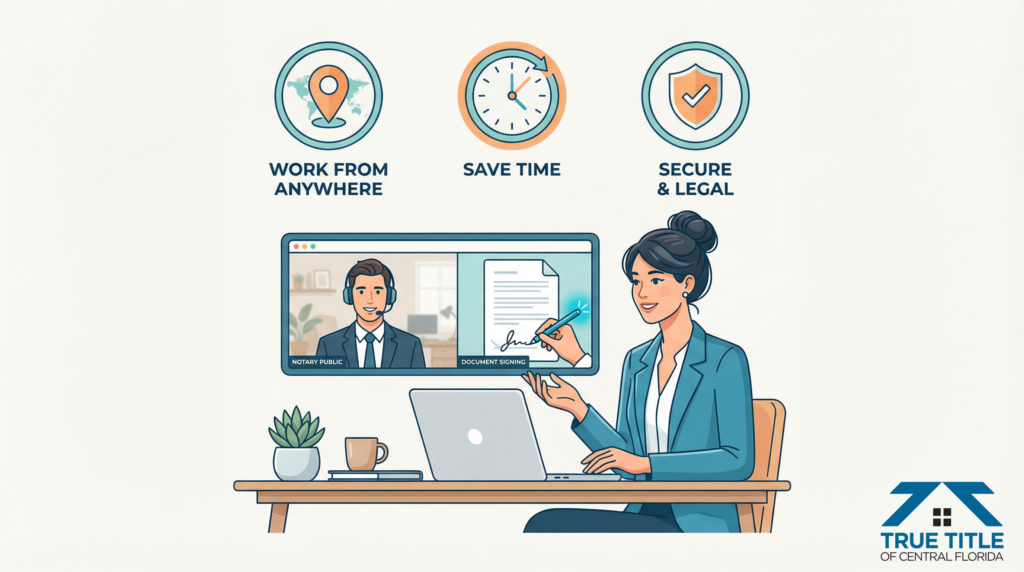
Remote Online Notarization is a process that allows a notary public to notarize documents remotely, using audio-visual technology. Instead of meeting in person, the signer and the notary connect via a secure online platform. The notary verifies the signer’s identity using a multi-step authentication process, and the signing of the documents is recorded.
Florida has been a leader in the adoption of RON, with a comprehensive legal framework in place to ensure the security and validity of remote notarizations. This has been a game-changer for the real estate industry, allowing for closings to take place from anywhere in the world.
How Does RON Work?
The RON process is designed to be both secure and user-friendly. Here’s a step-by-step overview of how a typical RON closing works:
1. Document Preparation: The title company prepares the closing documents and uploads them to a secure RON platform.
2. Identity Verification: The signer logs into the platform and completes a multi-factor authentication process. This may include answering knowledge-based authentication questions, and using credential analysis to verify a government-issued ID.
3. Audio-Visual Session: The signer connects with a commissioned remote notary via a live, two-way audio-visual session. The entire session is recorded and stored for a minimum of 10 years, as required by Florida law.
4. Document Signing: The notary and the signer review the documents together. The signer then electronically signs the documents, and the notary applies their electronic seal and digital certificate.
5. Document Delivery: The notarized documents are then securely delivered to all relevant parties.
The Benefits of RON
The adoption of RON offers a multitude of benefits for real estate agents and their clients:
* Convenience: RON eliminates the need for all parties to be physically present at the closing. This is a significant advantage for out-of-state or international clients, as well as for busy professionals who may have difficulty taking time off for a traditional closing.
* Efficiency: RON can significantly speed up the closing process. Documents can be signed and notarized in a matter of minutes, rather than days. This can be particularly beneficial in a fast-moving market.
* Security: The multi-layered security protocols used in RON make it a highly secure process. The audio-visual recording of the signing provides a strong audit trail and helps to prevent fraud.
* Cost Savings: RON can help to reduce costs associated with travel, printing, and shipping of documents.
When is RON Appropriate?
While RON offers many advantages, it’s not the right solution for every situation. It’s important to understand when RON is appropriate and when an in-person closing may be a better option. RON is an excellent choice for:
* Out-of-State or International Clients: For clients who are not located in Florida, RON is a game-changer. It allows them to close on their property without the time and expense of traveling.
* Tech-Savvy Clients: Clients who are comfortable with technology will appreciate the convenience and efficiency of RON.
* Simple Transactions: RON is well-suited for straightforward transactions where there are no complex legal issues to address.
In some cases, an in-person closing may be preferable. This could include situations where the client is not comfortable with technology, or where there are complex legal documents that require a more in-depth, face-to-face discussion.
Addressing Common Concerns
As with any new technology, there can be some concerns and misconceptions about RON. Here are some of the most common concerns and how to address them:
* “Is it secure?” Emphasize the multi-layered security protocols, including identity verification and the audio-visual recording of the signing.
* “Is it legal?” Assure your clients that RON is fully legal and recognized in the state of Florida.
* “What if I’m not tech-savvy?” Many RON platforms are designed to be user-friendly. Offer to do a practice run with your clients to help them feel more comfortable with the process.
Conclusion
Remote Online Notarization is more than just a trend; it’s a fundamental shift in how real estate transactions are conducted. For agents in Marion County, embracing RON is a powerful way to enhance the client experience, increase efficiency, and stay ahead of the competition. By understanding the benefits, limitations, and best practices of RON, you can confidently offer this innovative solution to your clients and position yourself as a forward-thinking leader in the local market.
Ready to learn more about how RON can benefit your business? Contact us today to learn about our RON services and how we can help you provide a seamless and secure closing experience for your clients.